Part 1: Why Land Reparations Matter in Twin Oaks Context
Land reparations respond to centuries of land theft, exclusion, and dispossession experienced by Black, Indigenous, and other people of color through colonization, genocide, slavery, Jim Crow laws, redlining, and discriminatory land policies. Twin Oaks was founded during the back-to-the-land movement of the late 1960s and early 1970s, a time when predominantly white communities were able to acquire and steward land, meanwhile Black and Indigenous communities were actively blocked through violence, discrimination, and economic barriers. Like many white intentional communities from that period, Twin Oaks benefited from these white supremacist conditions, even while pursuing egalitarian ideals.
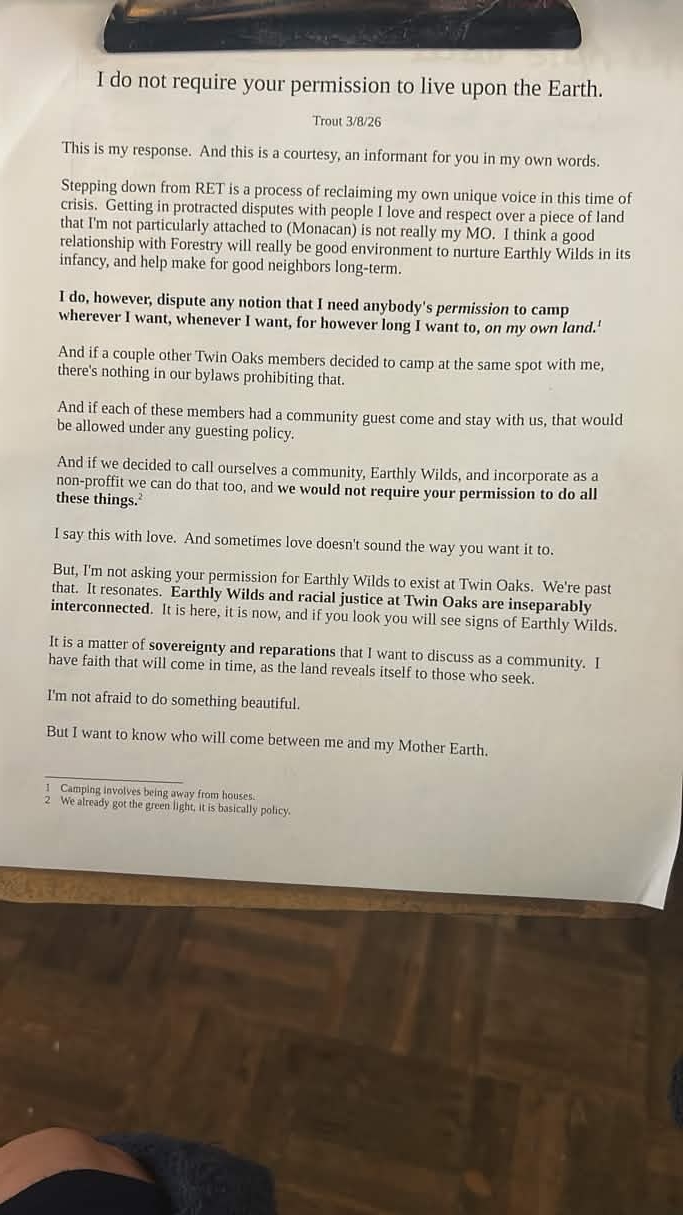
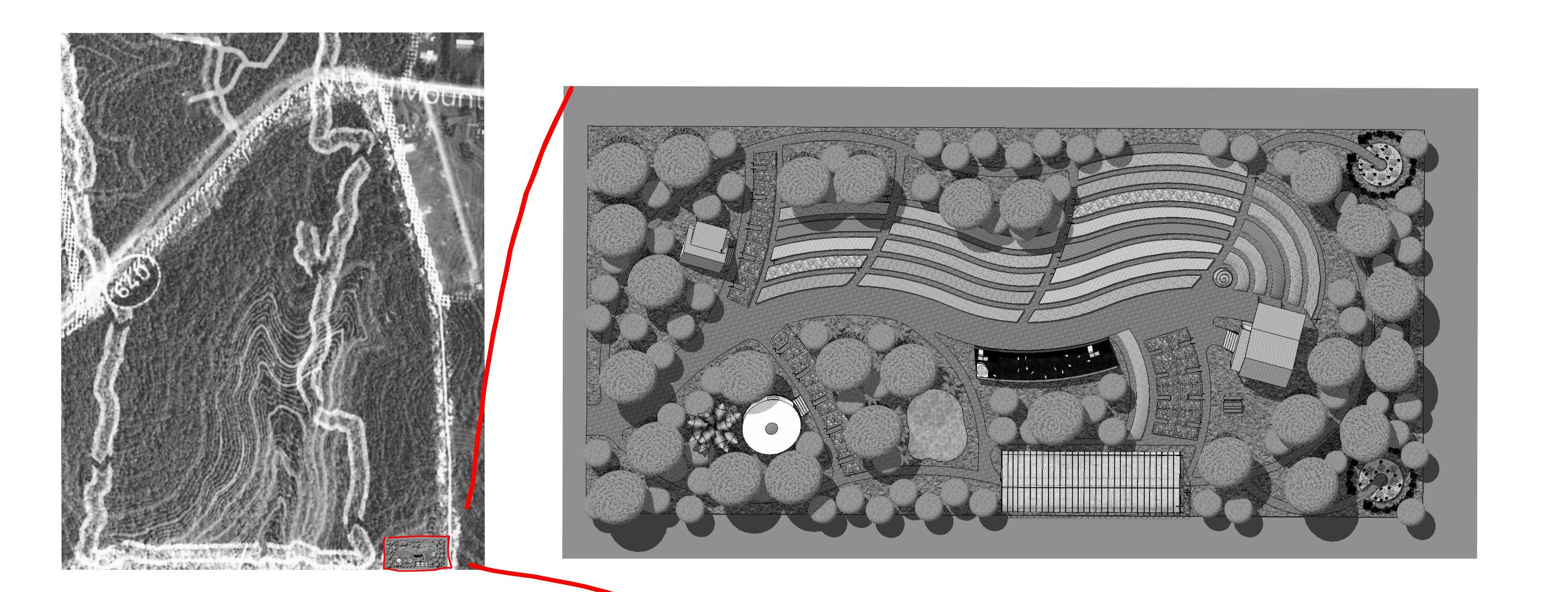
Reparations acknowledge this history and take material steps to support healing of land-based racialized trauma, while providing BIPOC autonomy and sovereignty. Earthly Wilds exists to create BIPOC-led sovereign space as a form of repair, not as an internal expansion of Twin Oaks. Land reparations are not charity, gifts, or rewards. Framing reparations as “Twin Oaks giving away free land” misunderstands the purpose entirely.
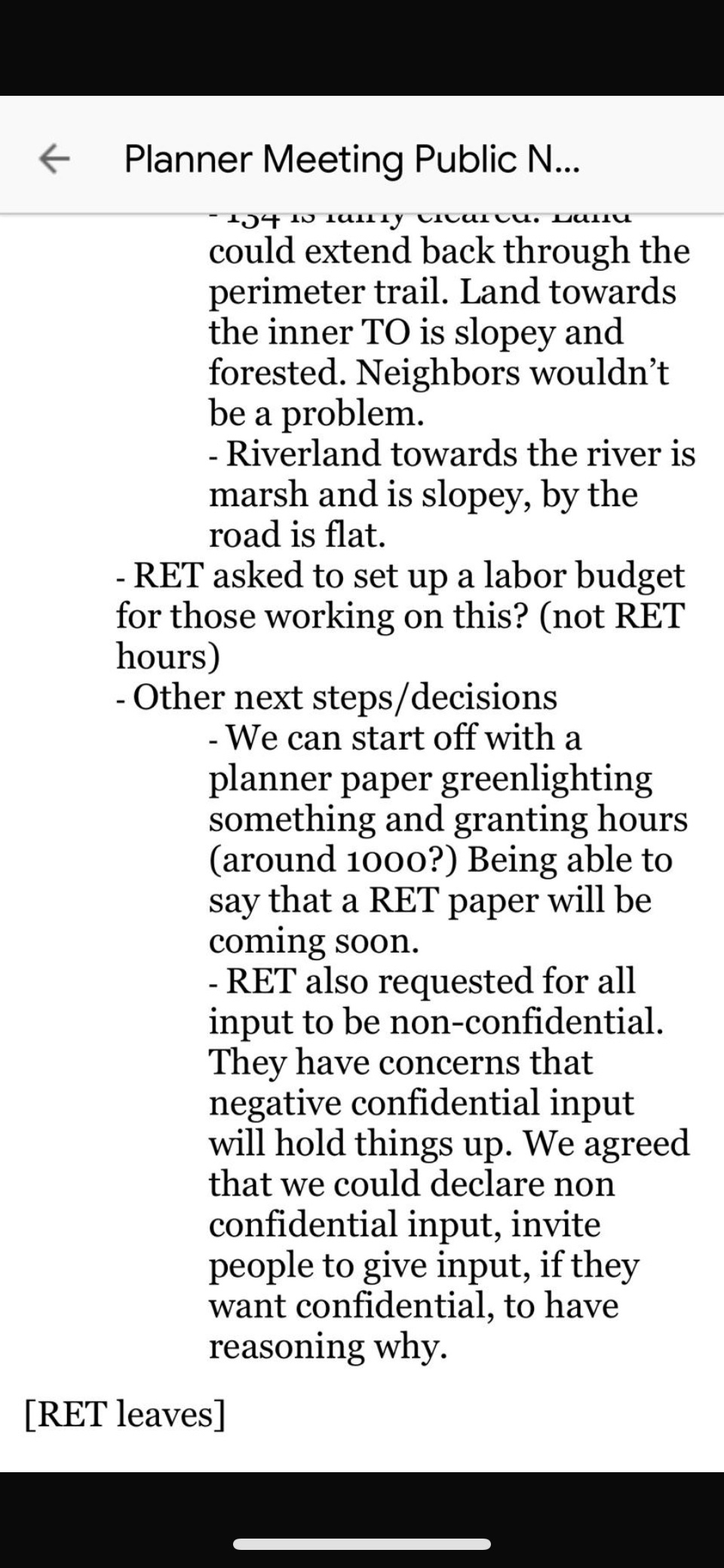
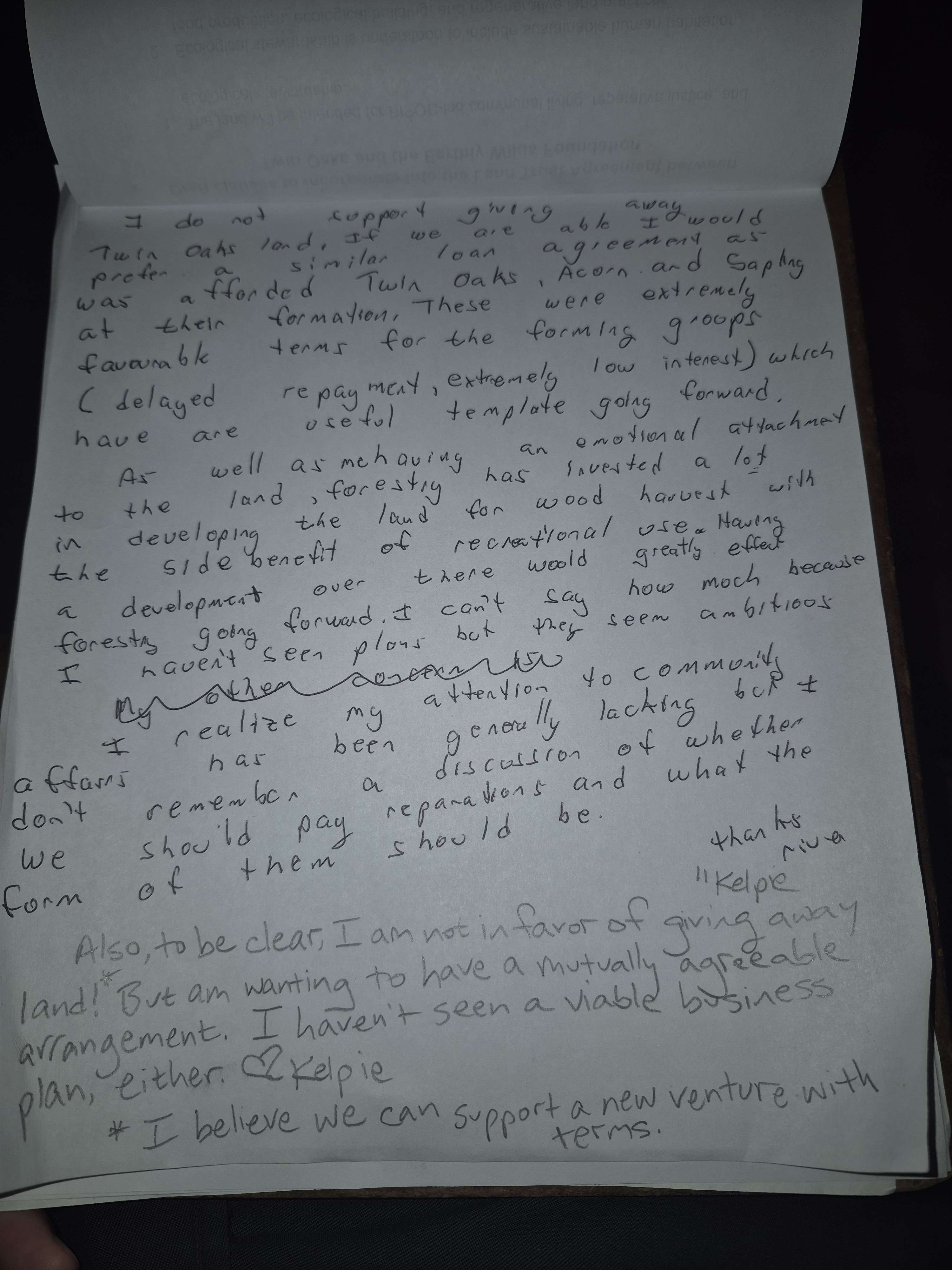
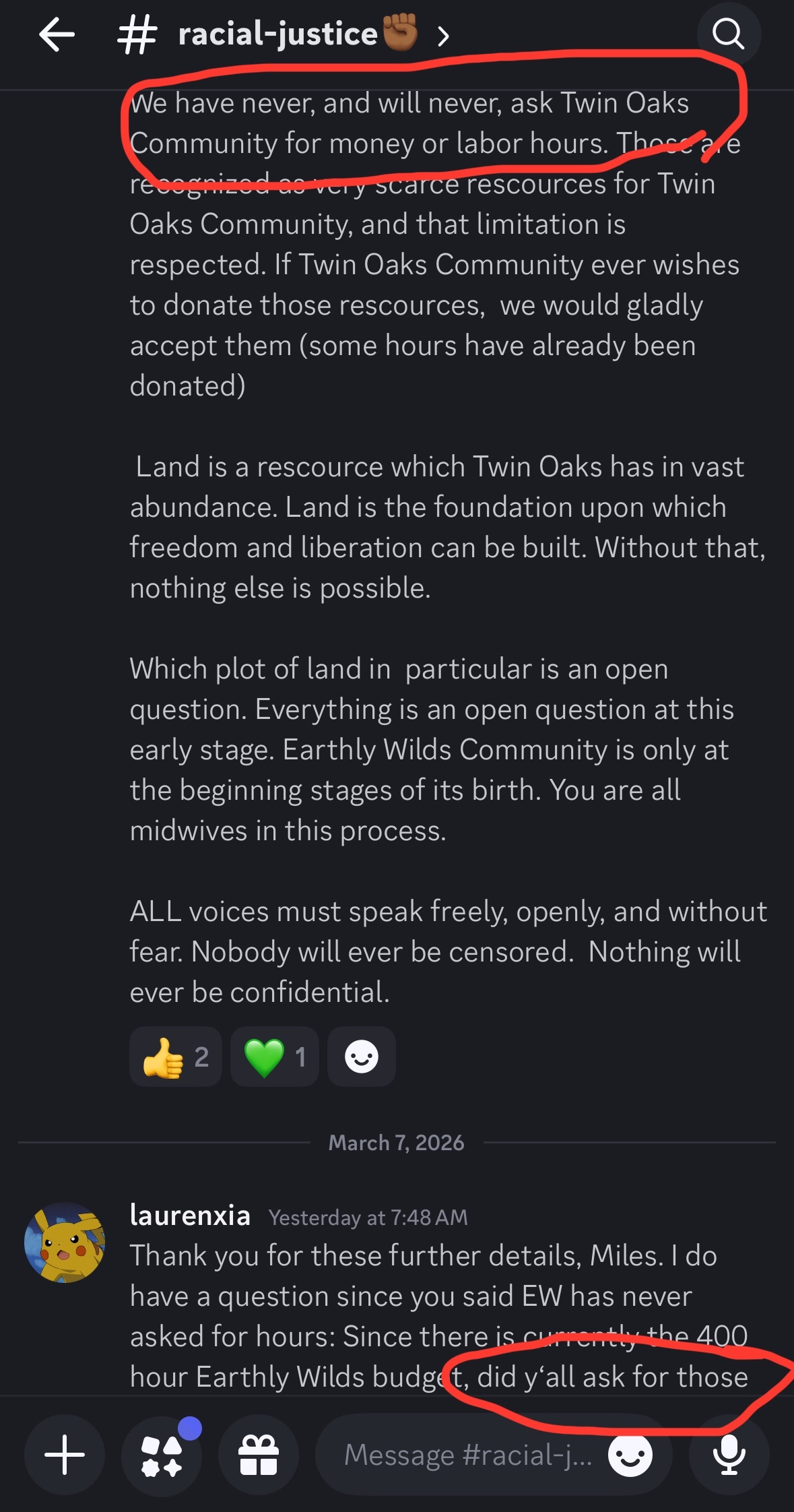
“Loans” Are Incompatible With Reparations. Loans preserve debt, leverage, and conditionality, reproducing the same power dynamics that reparations are meant to interrupt. Asking a BIPOC-centered reparations project to incur debt to access land already held by Twin Oaks maintains long-term institutional control and undermines sovereignty, autonomy, and economic freedom. While loans may be appropriate for internal expansion projects, they are incompatible with reparative justice. If the solution mirrors the systems that created the harm, it is not reparative.


 3
3


 2
2 2
2 1
1 5
5






 3
3
 4
4 6
6



 1
1

 2
2
 1
1

 3
3

 1
1






 P.B. Emma & Rowan
 1
1
 1
1